Your Industry Has Specific Risks — We Know Them Cold
A generalist broker treats every business the same. Here's why that matters: insurance premiums are calculated using industry classification codes. The wrong code can inflate your premium by 15–40%. The wrong policy form can leave you uninsured for the exact risk your industry faces most. We've seen contractors lose six-figure claims over a single exclusion nobody explained. We've watched tech firms pay double for coverage that didn't even match their exposure. We specialize in six industry verticals so you don't overpay or under-cover — and so when a claim hits, there are no surprises.
Deep Specialization, Not Surface Familiarity
We serve small and medium-sized businesses across the GTA, with concentrated expertise in six industry verticals. For each, we maintain current knowledge of industry-specific policy forms, classification codes, regulatory requirements, and claims patterns. Our team of RIBO-licensed brokers attends industry-specific continuing education, tracks carrier appetite changes by sector, and reviews claims data annually to update our 47-point coverage gap checklist.
That depth is what lets us place coverage like GreenThread's product liability at $4,200 instead of the $11,000 a generalist broker quoted. It's what let Elena spot a completed operations exclusion that would have cost Patel & Sons Mechanical $180,000. And it's why our 94% first-submission claims approval rate consistently outperforms the industry average — because coverage placed correctly pays out correctly.
Six Industries We Know Inside and Out
 C
C
Contractors & Trades
Key risks: Completed operations liability, tools & equipment coverage, contractor's pollution liability, WSIB classification errors, additional insured requirements from general contractors, and wrap-up exclusion gaps on large projects.
Contractors face a unique problem: the work you did last month can generate a claim next year. If your CGL policy doesn't include proper completed operations coverage — or if the form uses restrictive sub-limits — you're exposed for every job you've ever finished. We review every contractor policy against project-specific contractual requirements to ensure endorsements like additional insured, waiver of subrogation, and primary/non-contributory language are in place before your boots hit the site.
Typical coverage: CGL with completed operations, commercial auto, umbrella liability, surety bonds, tools & equipment floater, contractor's pollution liability.
Learn about contractor coverage → P
P
Professional Services & Technology
Key risks: Professional liability (E&O), technology E&O, cyber liability, D&O, intellectual property infringement, contractual liability from client service agreements, and retroactive date management during broker transitions.
If your business sells advice, designs, code, or consulting services, your clients rely on your professional judgment — and that creates liability exposure that a standard CGL policy explicitly excludes. We match the E&O form to your specific service model. A management consultant's policy reads very differently from a software developer's technology E&O, and placing the wrong form means paying premium for coverage that won't respond when you need it. We also handle retroactive date management carefully during policy transitions — this is the single biggest source of accidental coverage gaps in professional liability.
Typical coverage: Technology E&O, cyber liability, CGL, D&O, media liability.
Learn about professional services coverage → F
F
Food Service & Hospitality
Key risks: Host liquor liability, spoilage coverage, commercial fleet (refrigerated vehicles), event cancellation, food contamination liability, business interruption from health authority closures, and tenant's legal liability for leased commercial kitchen space.
Food service businesses juggle a particularly complex set of exposures — perishable inventory, liquor service, mobile catering operations, and event-based revenue that can't be rescheduled. A standard CGL form won't cover liquor liability unless it's explicitly endorsed, and most commercial auto policies exclude spoilage unless you add a mechanical breakdown and refrigeration endorsement. We structure programs that account for the full chain of risk, from your prep kitchen to your client's venue and back. Marcus specializes in hospitality accounts and understands the carrier appetite differences between caterers, restaurants, and event-based operations.
Typical coverage: CGL with liquor liability, commercial auto with spoilage endorsement, event cancellation, umbrella liability, business interruption.
Learn about food service coverage → H
H
Healthcare & Medical Clinics
Key risks: Facility-level CGL (beyond individual practitioner CMPA coverage), medical equipment valuation and agreed-value endorsements, tenant's legal liability for leased clinic space, cyber liability for patient health records (PHIPA compliance), and business interruption from equipment failure or facility damage.
Most practitioners assume their CMPA or professional college coverage handles everything. It doesn't. Individual practitioner insurance covers your clinical decisions — but the clinic itself needs facility-level CGL for slip-and-falls in the waiting room, commercial property coverage for diagnostic equipment worth tens of thousands, and cyber liability to respond to a breach of patient health records. We've seen clinics operating for years with six-figure equipment exposure completely uninsured because nobody distinguished between practitioner coverage and facility coverage. Priya works closely with multi-practitioner clinics to build bundled programs that close these gaps without duplicating coverage you already carry.
Typical coverage: Commercial property (agreed-value), CGL, tenant's legal liability, cyber liability, business interruption.
Learn about healthcare coverage →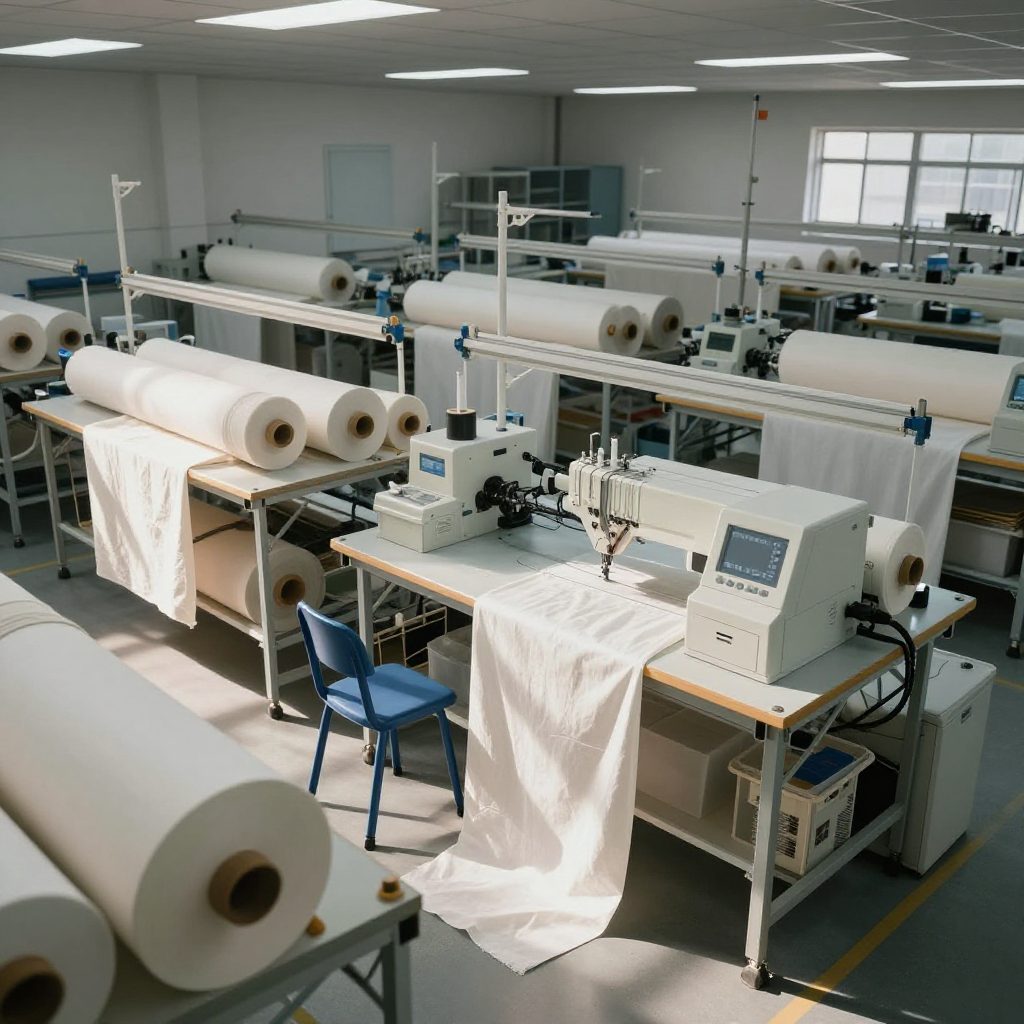 M
M
Manufacturing & E-Commerce
Key risks: Product liability (allergic reaction, defect, mislabeling), stock throughput/inland marine, warehouse contents valuation, cross-border shipping liability, product recall expense, and e-commerce platform liability for direct-to-consumer sellers.
If you make a physical product and sell it — whether through retail, wholesale, or your own Shopify store — you carry product liability exposure from the moment it leaves your facility. A consumer allergic reaction, a labeling error, or a manufacturing defect can generate claims that dwarf your annual revenue. The critical factor most businesses don't realize: classification codes matter enormously. A generalist broker unfamiliar with your manufacturing process will often default to a broader, higher-risk code — and the premium difference can be thousands of dollars per year for identical coverage. James placed GreenThread's product liability at $4,200 because he understood apparel manufacturing classification codes. Their previous broker, using the wrong code, quoted $11,000 for inferior coverage. Read more about the hidden cost of wrong classification codes in our resource library.
Typical coverage: Product liability, stock throughput, commercial property, umbrella, inland marine, product recall.
Learn about manufacturing coverage → R
R
Property Management
Key risks: Multi-property blanket coverage, D&O for management entities, umbrella liability across properties, staggered renewal consolidation, tenant discrimination claims, common-area liability, and building code upgrade requirements after a loss.
Property managers face a unique operational headache on top of their coverage needs: managing multiple policies across multiple buildings, often with different carriers, different renewal dates, and inconsistent coverage terms. The admin burden alone can cost dozens of hours per year — time you could spend managing properties instead of chasing renewal paperwork. We consolidate multi-property portfolios onto blanket policies that cover all buildings under a single program, with one renewal date and one set of terms. Marcus specializes in property management accounts and handles the carrier negotiation to ensure blanket limits are allocated appropriately across high-value and lower-value properties. For larger portfolios, we also place D&O coverage for the management entity and structure umbrella liability across the entire portfolio.
Typical coverage: Commercial property blanket, D&O, umbrella, tenant/landlord liability, boiler & machinery.
Learn about property management coverage →What Industry Expertise Delivers
Don't See Your Industry? We Can Still Help.
We work with businesses across dozens of verticals — retail, transportation, non-profits, professional associations, creative agencies, and more. These six industries are where we have the deepest bench and the longest track record, but our coverage review process applies to any operation. Every engagement starts with the same rigorous 47-point gap analysis, the same competitive carrier comparison across 20+ insurers, and the same assigned broker who picks up the phone when you call.
If you're wondering whether we can help with your specific business, the fastest way to find out is a five-minute conversation. Call (416) 555-0100 or send us a message — no pressure, no obligation.